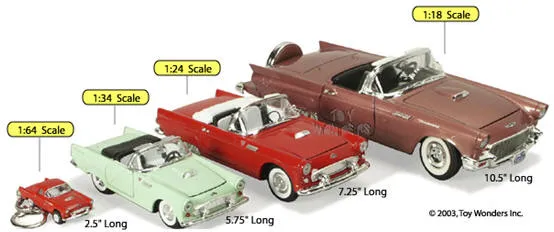
Understanding Diecast Car Scales
Diecast car collecting is a fascinating hobby, but it can be overwhelming for newcomers. One of the first and most important decisions a collector faces is choosing the right scale. The scale of a diecast car refers to the ratio of the model’s size to the size of the actual vehicle. Understanding scales is crucial because it affects everything from the model’s size and detail to its price and the space required to display your collection. This guide will provide a comprehensive overview of diecast car scales, helping you make informed choices and enjoy your collecting journey.
What is Scale in Diecast Cars?
The scale of a diecast car is a numerical representation of the relationship between the model’s dimensions and the actual car’s dimensions. For example, a 1:18 scale model is 1/18th the size of the real car. This means that every 1 inch on the model represents 18 inches on the actual vehicle. Common scales include 1:18, 1:24, 1:43, and others. Each scale offers a different balance of size, detail, and cost. Choosing the right scale depends on your personal preferences, available space, budget, and the types of cars you’re interested in collecting. Selecting the scale allows collectors to narrow down their choices and focus on specific models and brands they enjoy.
Common Diecast Car Scales

Several scales dominate the diecast car market, each offering a unique collecting experience. Knowing the characteristics of each scale will help you decide which is right for you. The most popular scales provide a range of options in terms of detail, price, and availability. Consider the space you have available to display the cars, and what your budget is before settling on a scale.
1:18 Scale Diecast Cars
1:18 scale is a popular choice for its impressive level of detail and relatively large size. These models are typically about 10-12 inches long, making them highly displayable and allowing for intricate features. They often have opening doors, hoods, and trunks, along with detailed engine compartments and interiors. The larger size allows for more realism and a greater appreciation of the car’s design. However, this scale requires more space to display a collection and is generally more expensive than smaller scales.
Features of 1:18 Scale Models
- Detailed interiors and exteriors
- Opening doors, hood, and trunk
- Highly collectible with many limited editions
- Requires more display space
- Can be more expensive
1:24 Scale Diecast Cars

1:24 scale is another widely collected scale, offering a good balance between detail and affordability. These models are smaller than 1:18 scale, usually around 7-9 inches long, making them easier to display. They often feature opening parts and detailed interiors, though perhaps not to the same extent as 1:18 models. This scale provides a good entry point for new collectors, offering a variety of models at a more accessible price point. The size is also more manageable if you have limited display space.
Characteristics of 1:24 Scale Models
- Good balance of detail and affordability
- Easier to display due to smaller size
- Opening parts and detailed interiors
- Wide variety of models available
- More affordable than 1:18 scale
1:43 Scale Diecast Cars
1:43 scale is a very popular scale, especially for those interested in a vast array of models without requiring much space. These models are significantly smaller, typically around 4-5 inches long, making them ideal for collectors with limited display space. While the detail level may be slightly less than in larger scales, 1:43 models offer a vast selection of vehicles, including many rare and historical cars. They are also generally more affordable, allowing collectors to build a larger collection on a smaller budget. The smaller scale allows for collections to grow rapidly, as more models can be acquired in the same space.
Advantages of 1:43 Scale Models

- Ideal for collectors with limited space
- More affordable than larger scales
- Wide variety of models available
- Good level of detail for their size
- Easy to store and transport
Other Popular Scales
Besides the most common scales, there are other options to consider, such as 1:64 scale (often used for Hot Wheels and similar brands), 1:12 scale (larger, more detailed models), and scales for specific purposes like model railroads. Each scale offers a different collecting experience and caters to different tastes and interests. Some collectors specialize in a particular scale, while others diversify across multiple scales. Exploring different scales can reveal new collecting opportunities and introduce you to a diverse range of models.
Factors to Consider When Choosing a Scale
Choosing the right scale involves considering several factors that will affect your collecting experience. You should take into account the available space for display, the budget you have to spend, and the availability of models in the scales you are considering. Personal preferences also play a crucial role in the decision-making process. By evaluating these factors, you can choose the scale that best suits your needs and allows you to enjoy your collecting hobby to the fullest. Considering these factors will ensure you make a choice that is sustainable and enjoyable.
Collection Space

The amount of space you have available for displaying your collection is a crucial factor. Larger scales like 1:18 require more space per model, quickly filling shelves and display cases. If you have limited space, consider smaller scales like 1:43 or 1:64. These scales allow you to build a larger collection without overwhelming your display area. Think about how you want to showcase your models and choose a scale that complements the space you have available. Adequate display space will let you fully appreciate the details of your collection and prevent overcrowding.
Budget Constraints
Diecast car prices vary significantly depending on the scale, detail, and brand. Larger scales generally cost more due to the increased material and manufacturing costs. If you are on a tight budget, smaller scales or models from less expensive brands may be a better option. Setting a budget helps you to manage your spending and enjoy the hobby without financial strain. It’s possible to build an extensive collection at any budget level. Researching prices and comparing different scales will help you make an informed decision.
Availability of Models
The availability of models in your preferred car types and brands can also influence your scale choice. Some scales offer a wider variety of models than others. If you are particularly interested in collecting a specific type of car, research which scale has the most models available. Popular scales like 1:18, 1:24, and 1:43 offer a broad selection. Consider the rarity of models in your chosen scale. Availability can affect your ability to grow your collection and find the cars you are most interested in.
Personal Preferences

Ultimately, the best scale is the one you enjoy the most. Consider what appeals to you in a diecast car. Do you prefer intricate details and a larger size, or do you value a broader selection and easier display? Visit hobby shops, attend car shows, and look at online collections to see different scales in person. Handling different models can help you determine which scale feels right for you. It is fine to collect in multiple scales. Follow your passion, and choose the scale that brings you the most enjoyment.
Tips for Selecting the Right Scale
Choosing the right scale is a personal journey that requires research and exploration. Here are a few tips to help you make the best decision for your diecast car collecting hobby. Taking your time, visiting shops, and talking to experienced collectors will help guide you toward the right choices for your needs and interests. Remember that the goal is to have fun, so choose the scale that brings you the most enjoyment.
Research Different Scales
Before making a decision, research the different scales available. Look at pictures and videos of models in various scales to get a sense of their size and detail. Read reviews and compare prices and model availability. Websites, forums, and social media groups dedicated to diecast car collecting are great resources. This research will help you narrow down your options and identify the scales that best match your interests and collecting goals.
Visit Hobby Shops and Shows

The best way to experience different scales is to see them in person. Visit local hobby shops and attend diecast car shows or events. This allows you to handle the models, compare their sizes, and assess their detail levels firsthand. Talking to other collectors can provide valuable insights and help you learn about their experiences. Observing the models up close will help you make a decision you will be happy with for years to come.
Start with a Small Collection
If you’re unsure which scale is right for you, start with a small collection of models in a few different scales. This allows you to experiment and see which one you enjoy the most before investing heavily. You can always adjust your focus later. Collecting in a variety of scales initially helps you to better understand your preferences. This can evolve as you gain more experience and learn about different brands and types of cars.
Conclusion
Choosing the right scale for your diecast car collection is a crucial step in starting or growing your hobby. By understanding the different scales, considering your personal preferences, and evaluating factors like space, budget, and model availability, you can make an informed decision. Remember that the best scale is the one that brings you the most joy. Enjoy the process of building your collection, and happy collecting!